How AI is revolutionizing medical diagnosis
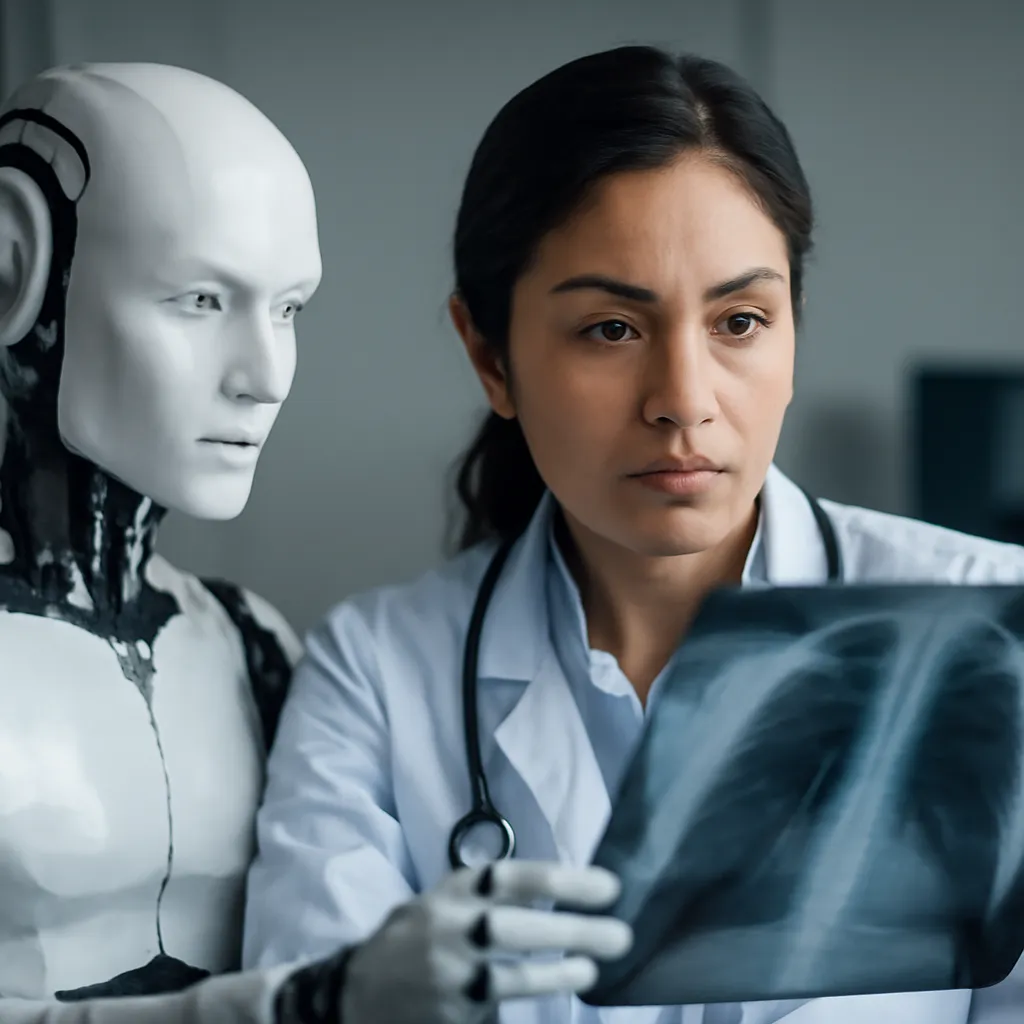
Artificial intelligence has fundamentally transformed the way doctors identify diseases. Algorithms trained on millions of medical images can detect anomalies with up to 98%, in many cases superior to human perception.This advance is not merely theoretical: hospitals around the world already use AI to analyze radiographs, tomography scans and magnetic resonance imaging in a matter of seconds.
AI systems can identify microcalcifications and malignant nodules that would go unnoticed on traditional mammograms.A recent study has shown that when radiologists work in conjunction with AI, the detection rate increases by 15% and false positives decrease significantly.The direct result: earlier diagnoses and longer survival.
Advertisement
In addition to imaging, AI algorithms analyze complex patterns in raw clinical data.When a patient arrives at the emergency room with generic symptoms, AI processes their medical history, laboratory tests, medications, and even genetic factors to suggest differential diagnoses that a doctor alone would take hours to consider.
Diagnosis of rare and complex diseases
Rare disease patients face a journey of uncertainty: on average, it takes 5 to 7 years to receive a correct diagnosis. AI dramatically shortens this period.Specialized systems can identify genetic patterns and phenotypes that appear in a few documented cases, comparing data from global genomic databases in real time.
Neurodegenerative diseases such as Alzheimer's and Parkinson's also benefit from this technology. AI-processed brain magnetic resonance imaging can detect atrophy in specific regions years before clinical symptoms appear.This opens a crucial window for preventive interventions.Algorithms also analyze movement and speech patterns for early diagnosis of Parkinson's, allowing patients to start treatment when the disease is still reversible.
In genetics, AI sequencers interpret rare genetic variants in seconds.Children with complex genetic syndromes now receive diagnoses in weeks rather than years, enabling targeted treatments that make a real difference in their development.
Custom treatments based on genomic data
Precision medicine is no longer science fiction: it is in the offices today. AI analyzes the individual genetic profile of each patient to recommend therapies that will work specifically for their body, avoiding ineffective drugs or with severe side effects.
In cancer, this impact is transformative. Tumors are not the same, even if of the same type. Artificial intelligence-coupled genomic sequencing identifies the specific mutations in each cancer and suggests targeted therapies.A lung cancer patient may receive a tyrosine kinase inhibitor only if their EGFR mutation is present, while another may need immunotherapy. This increases the response rate from 20% to 60% or more.
Cardiovascular diseases also gain personalized treatments.AI analyzes risk genotypes (such as variants in cholesterol genes) combined with family history, lifestyle habits and inflammatory markers to predict who will suffer a heart attack. Patients at very high risk receive statins and antithrombotics more aggressively, while others save on unnecessary medications.
Prediction of therapeutic response and dose optimization
Not every patient responds the same as a drug.Genetic variations in metabolizing enzymes (such as cytochrome P450) make an antibiotic or antidepressant work brilliantly in one patient and be useless or toxic in another. AI processes these variations to predict the optimal dose individually.
Pharmacogenomic algorithms are already integrated into electronic prescribing systems of large hospitals.When a doctor prescribes warfarin (anticoagulant), the system checks relevant genes and automatically adjusts the dose for each patient, reducing bleeding complications by up to 50%. Cost savings combined with better safety.
In oncology, the same logic applies to chemotherapies.AI predicts which patient will tolerate an aggressive dose (which kills more cancer) versus which will need frequent reductions.Studies show that AI-optimized dosing improves recurrence-free survival by up to 8 months.
Continuous monitoring and early detection of complications
With wearable devices and sensors connected, AI monitors patients 24/7. A cardiac patient does not expect a heart attack; AI detects premature arrhythmias, pressure variations or patterns of electrical activity that precede events.
Diabetics equipped with continuous glucose sensors receive alerts of imminent hypoglycemia and suggestions for adjustments in insulin generated by algorithms. Result: fewer hospitalizations, fewer amputations, better glycemic control. Patients with heart failure can monitor weight, heart rate and daily O2; AI detects decompensations in 2-3 days of change, enough time for intervention in the office instead of in the emergency room.
In severe infectious conditions, AI processes thousands of clinical variables to predict sepsis 6 to 24 hours before collapse. Patients receive antibiotics earlier, saving lives.An ICU study showed a 40% reduction in sepsis mortality when AI guides treatment protocols.
Ethical, regulatory and clinical challenges
AI models trained predominantly on white patient data work worse in black or Asian patients, reproducing health disparities.Regulators still struggle to validate algorithms rigorously without freezing innovation.
Genomic data privacy is also a critical issue: who accesses your genome? Insurers could discriminate? Legislations such as the LGPD in Brazil begin to set limits, but regulation still walks behind the technology.
Despite these obstacles, the consensus is clear: AI does not replace doctors, but amplifies their capacity. A radiologist with AI is better than a radiologist without AI or AI without a radiologist.