
Introduction to Quantum Computing
Quantum computing represents a fundamental change in the way we process information. While traditional computers work with bits (0 or 1), quantum computers use qubits (quantum bits), which can exist in multiple states simultaneously. This revolutionary capability promises to solve complex problems that would take millions of years on conventional machines.
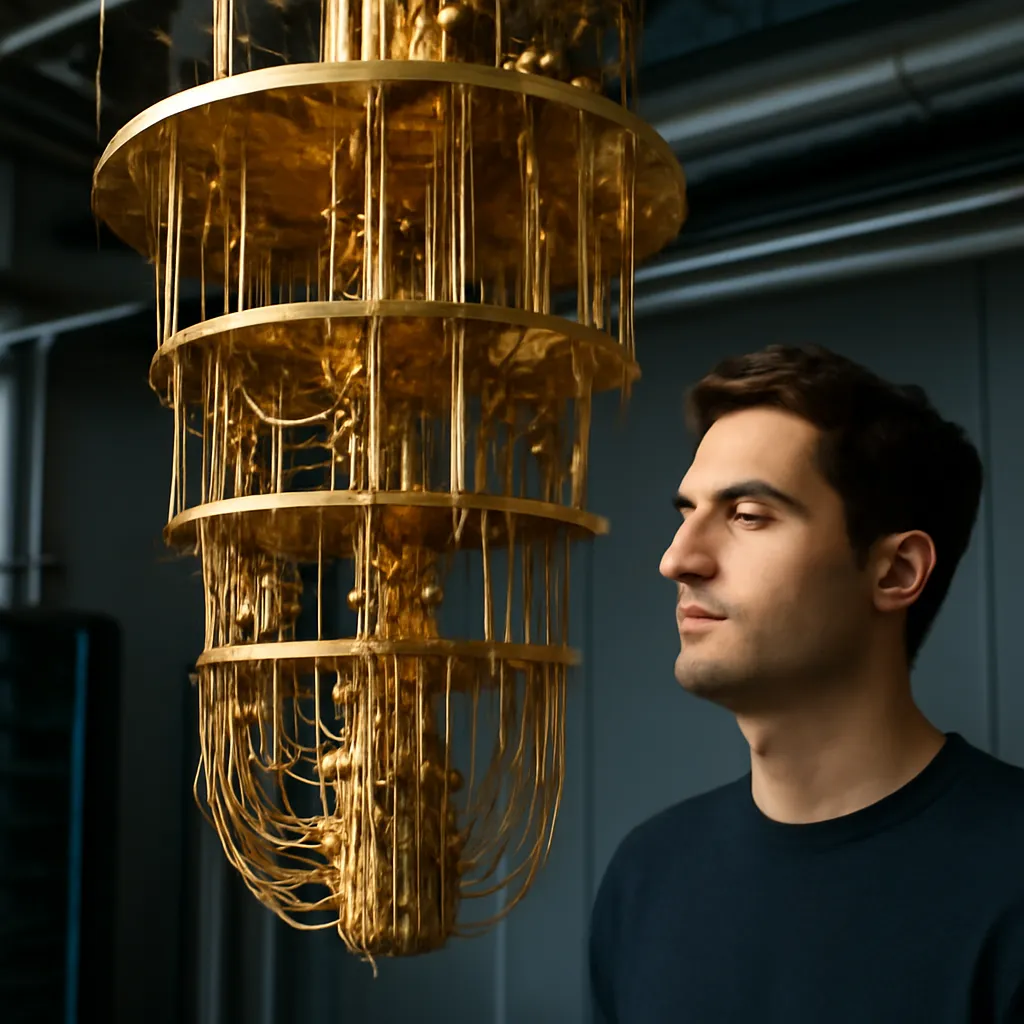
Google Quantum
The technology is still at an early stage, with companies such as IBM, Google and D-Wave leading the development.Huge global investments indicate that quantum computing will transform sectors such as cryptography, medicine, artificial intelligence and materials discovery in the coming years.
Advertisement
The Fundamental Principles of Quantum Mechanics
Quantum Superposition
One of the key concepts is a superpositionwhile a classical bit is 0 or 1, a qubit can be 0, 1, or both simultaneously until measured. Imagine a quantum data that is on all faces at once until observed.
This capacity grows exponentially: 2 qubits can represent 4 states, 3 qubits represent 8 states, and 300 qubits could theoretically represent more states than atoms in the observable universe.
Quantum Entanglement
O entanglement it occurs when qubits correlate in a way that the state of one instantly affects the other, regardless of distance. This deep connection allows quantum computers to process information in an integrated and extremely efficient way.
Without entanglement, qubits would function as independent bits.With entanglement, the computer accesses complex correlations that produce extraordinary computational power for specific problems.
Quantum Interference
A interference it amplifies the probabilities of the right solutions while canceling the wrong ones, dramatically increasing the chance of finding the right answer when measuring the end result.
How They Differ from Classic Computers
Classic computers process information sequentially or in limited parallel, following rules of Boolean logic.A 64-bit processor can process 264 states possible, but not simultaneously.A quantum computer with 64 qubits can theoretically process 264 states in full parallel.
Speed is not the only differential algorithmic approach quantum algorithms like Shor (large number factorization) and Grover (base search) exploit superposition and interference to dramatically outperform their classical equivalents.
There is a critical point: quantum computers are NOT simply faster for everything. For everyday tasks like web browsing or text editing, a classical computer remains more practical. Quantum computers shine on specific mathematical problems and complex optimization.
Physical Implementation Technologies
Superconducting Qubits
The most mature approach currently used by IBM and Google.Small superconducting circuits cooled to temperatures close to absolute zero (-273°C) create qubits.